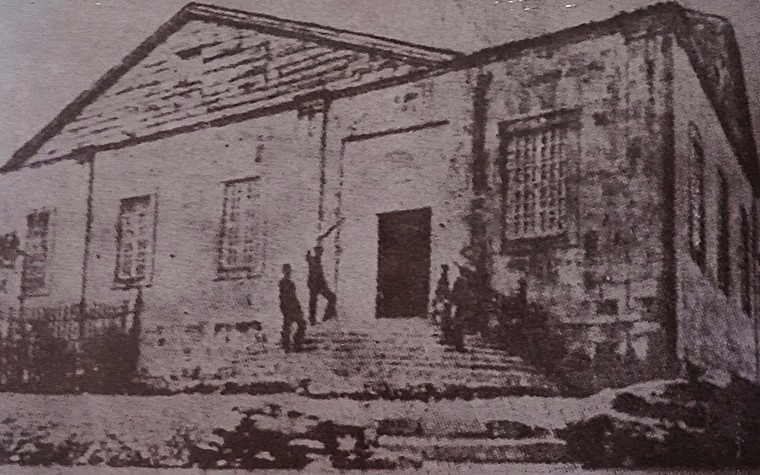
 The central Greek school of Bulancak.
Sam Topalidis (2026)
(Pontic Historian and Ethnologist)
Introduction
Turkish Bulancak (Greek Poulantzaki) on the north-east Turkish Black Sea coast (Pontos), is 18 km west of Giresun (Fig. 1; Plate 1) and can be considered part of Giresun’s metropolitan area. In Turkish, Bulancak means ‘a prosperous settlement’. Summers are warm and humid with winters cold and partly cloudy. The temperature typically varies from 4 to 26°C (Source). Annual precipitation is 1,570 mm (Source).
The terrain is very rugged, with a rapid ascent from the coast. Chestnut forests begin from the coast, but as one moves inland, the vegetation changes depending on the altitude with oak, hornbeam, spruce, fir and pine forests encountered in succession (Source).
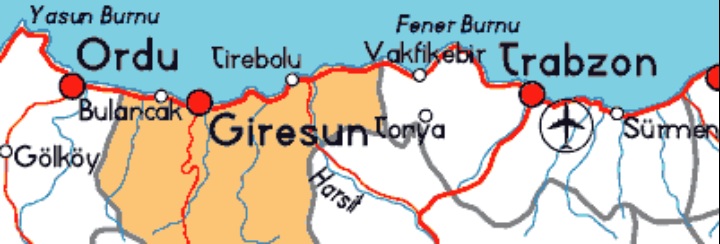
Fig. 1: Map of Bulancak, Black Sea coast, northern Türkiye (Giresun to Trabzon = 115 km, Source)
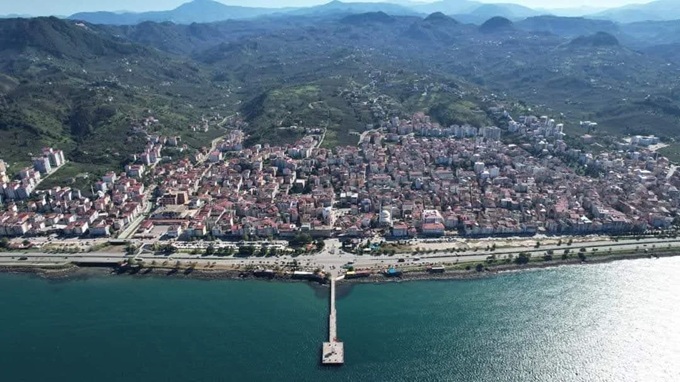
Plate 1: Bulancak, northern Türkiye (Source)
Early History
The Greek colony of Kerasous (modern Giresun) was established by Greeks before 400 BC when Xenophon and 8,600 Greek mercenaries visited the walled Greek settlement (on their way back to Greece). From Kerasous, Xenophon and the mercenaries marched west to the frontier of the Mossynoeci, the local natives who lived in the area of current Bulancak. So, the Greeks colonised the site of Bulancak sometime after 400 BC.
The army of Alexander the Great (Macedonian king, reign 336–323 BC) defeated the Persians in Anatolia. Later in c.302 BC, Mithradates (of Persian descent), established the kingdom of Pontos, until the reign of Mithradates VI who was defeated by the Romans in 64 BC.1 The kingdom of Mithradates VI, which encompassed areas around the Black Sea coast and parts of Anatolia, was absorbed within the Roman empire in the 60s AD (Erciyas (2001); Roller (2020)).
In the 4th century, Anatolia came under the Eastern Roman (Byzantine) empire. In 1204, Alexios and David Komninos, nephews of Byzantine emperor Andronikos I, seized Trabzon from the Byzantines. In 1204–1461, the Komnenoi emperors of the small empire of Pontos controlled Trabzon and an area along the Anatolian northern coastline.
In 1397, the Çepni Turkmen conquered Giresun [and Bulancak] (Source).
Ottoman Era
In 1461, the Ottoman Turks took control of Trabzon, then Giresun and Bulancak. A blow came in 1764, during the valley lord (derebey) wars, when Giresun was devastated (Bryer and Winfield 1985:130).
In the early 19th century, Muslims east of Giresun, Greeks and Armenians from the Gümüşhane region (south of Trabzon, due to the decline of silver mining in the area) settled in Bulancak and in other coastal towns. In Bulancak, where carpet and linen weaving was widespread, copper work was also developed (Source).
Hamilton visited Bulancak in July 1836, but the villagers had moved for the warmer months to their village in the mountains (Hamilton 1842). In 1857, the British consul at Trabzon recorded 50 houses [around 250 people] in Bulancak, 30 of which were occupied by Greeks and 20 by crypto-Christians.2 However, in 1859, there were Muslims recorded in Bulancak as well as a Greek Orthodox church (Bryer 1983:41, 59–62).
In 1870, there were [around 1,750] Greeks with one Greek boys’ school in Bulancak. By 1896, the town had [around 2,000] Greeks (Lazaridis 1988:53).
Before 1900, the rice fields at Bulancak became a source of mosquitoes and as a result, in summer, the area was prone to malaria. As a consequence, residents were forced to take refuge for three months in the mountains. Some went to the Greek village of Gioma (four hours away) which had a Greek church and a Greek school, while others went to the mountain Agios Vasilios (Source).
World War I
In 1916, during World War I, the Christian populace of Bulancak was deported to the hinterland. When they returned, they found 60% of their properties damaged and they remained the target of Turkish attacks. At Tepekoy [15 km south-west of Bulancak], of the 700 deportees taken from this village in 1916, only 232 (a third) came back. A year after their return from exile, the villagers were rounded up and forced into a house by the notorious Topal Osman and his Turkish irregular forces. A few escaped capture. The Turks set fire to the house, killing those inside. Only one girl escaped the burning house to join those who had escaped earlier (Fotiadis 2019:185–186, 334).
Church
Little remains of the Christian religion in Bulancak. One notable exception is the Acisu Cave church 2 km from Bulancak’s town centre (Plate 2). It takes its name from the source of mineral water nearby. The church has two floors carved into the rock. The ground floor is made of three sections with an apse, while the upper floor consists of a rectangular small hermitage room (Buyruk 2014:443). The age of this church and its original name are unknown.
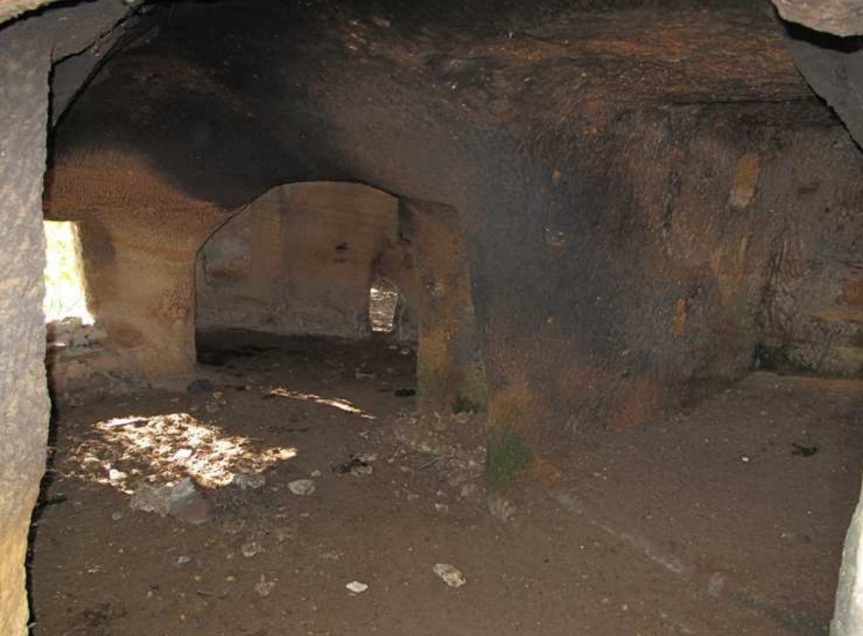
Plate 2: First floor, Acisu Cave church, Bulancak (Buyruk 2014:451)
Bulancak Today
Bulancak has a population of 50,100 (2024; www.bulancak.bel.tr/tarihi). It is a popular tourist destination with beaches, water sports, natural beauty and local culture (www.wisdomlib.org/cities/bulancak-11220). Agricultural products mainly consist of hazelnuts, cereals, vegetables and fruit. In addition to sea and freshwater fishing,
beekeeping has also developed in recent years. The district has some industrial development producing hazelnut products, fish meal and oil and furniture (Source).
Acknowledgements
I thank Michael Bennett and Russell McCaskie for their comments to an earlier draft.
References
1 Earlier, in 183 BC, Pharnakes I, son of Mithradates III captured Kerasous [which probably included Bulancak] (Bryer and Winfield 1985). In 72 BC, Kerasous then fell to the Romans.
2 Crypto-Christians were Christians who had converted to Islam, but retained their Christian beliefs and practices in secret. They revealed themselves as Christians during the Tanzimat Reforms (1839–1871) which allowed more religious freedom.
Sources
Bryer A (1983) ‘The crypto-Christians of the Pontos and consul William Gifford Palgrave of Trebizond’, Bulletin Centre for Asia Minor Studies, 4:13–68, 363–65, Athens, Greece.
Bryer A and Winfield D (1985) The Byzantine monuments and topography of the Pontos, I, Dumbarton Oaks Research Library & Collection, Harvard University, Washington DC, USA.
Buyruk H (2014) ‘Bulancak Acisu cave church’, (in Turkish) The Journal of International Social Research, 7(34):443–455.
Erciyas DBA (2001) Studies in the archaeology of Hellenistic Pontus: the settlements, monuments, and coinage of Mithradates VI and his predecessors, PhD thesis,
University of Cincinnati, Cincinnati, Ohio, USA.
Fotiadis KE (2019) The genocide of the Pontian Greeks, (unknown translator from Greek into English), KE Fotiadis, (unknown place of publication).
Hamilton WJ (1842) Researches in Asia Minor Pontus and Armenia: with some account of their antiquities and geology, 1, John Murray, London, England.
Lazaridis DTh (1988) Statistical list of Greek schools in the Pontos 1821–1922, (in Greek), Archeion Pontou, 16, Epitropi Pontiakon Meleton, [Committee for Pontic Studies]
Athens, Greece.
Roller DW (2020) Empire of the Black Sea: the rise and fall of the Mithridatic world, Oxford University Press, New York, USA.
Xenophon Anabasis (translated by Brownson CL 1922), Harvard University Press, Cambridge Massachusetts, USA at: www.perseus.tufts.edu/hopper/text?doc=Perseus%3Atext%3A1999.01.0202%3Abook%3D4