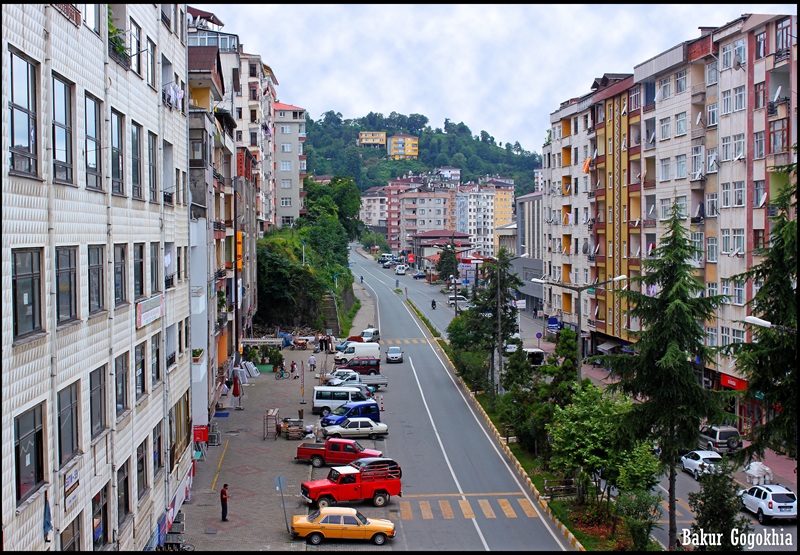
 Plate 1: Pazar (2014, Wikimedia Commons)
Sam Topalidis (2026)
(Pontic Historian and Ethnologist)
Introduction
The town of Athenai, also called Atina, now Turkish Pazar, (Plate 1; Fig. 1) on the Black Sea south-east coast, is around 38 km east of Rize and 120 km east of Trabzon in north-east Türkiye (Pontos). Pazar lies near the delta of the river Pazar. It is a district of Rize and stands out with its lush greenery and cultural richness with warm summers and snowy and partly cloudy winters. The temperature typically varies from -6°C to 28°C (See). Annual precipitation is over 2,000 mm.
Both Turkish and Laz are spoken in the area. The Laz spoken in Pazar is so different from the Laz spoken in Hopa (54 km to the east) that these people find it easier to speak to each other in Turkish (Beller-Hann and Hann 2001) (Note 1).
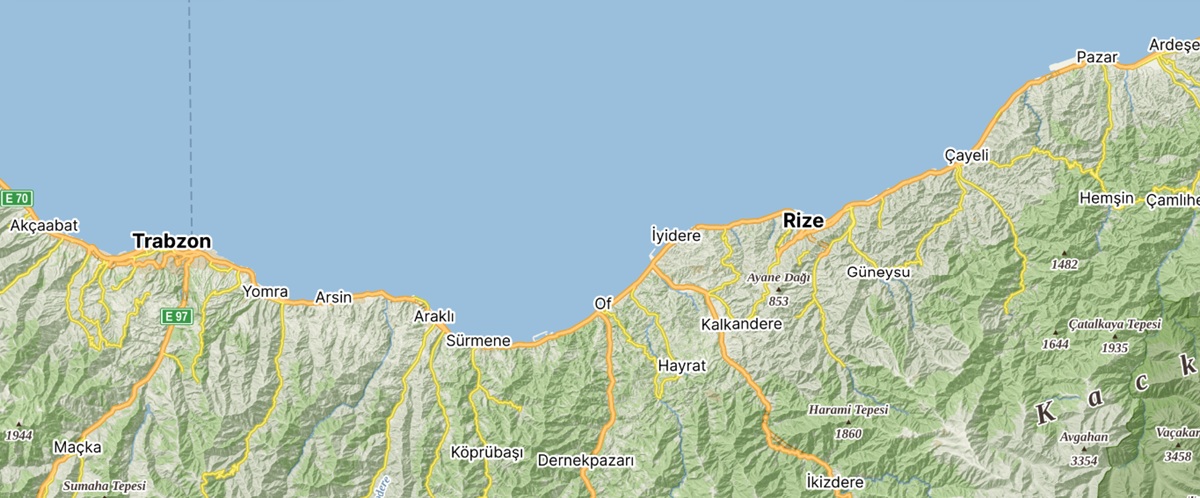
Fig. 1: Pazar location map (Rize to Pazar = 35 km; Source)
History
It is unknown when Athenai (Pazar) was founded, probably by Greek colonists (there were probably indigenous natives living in the area). Its name Athenai may have derived from a Laz word meaning ‘the place where there is shade’. Athenai was the coastal terminal for a minor route across the mountains and a market town. Its castle was abandoned in the 2nd century. The current ruined castle perched on a rock in the sea is a later medieval and probably Trapezuntine build (1204–1461), which passed into Ottoman Turk hands (Plate 2). It is about 1 km west of the centre of Pazar. A local report is that walls once connected it to the mainland (Bryer and Winfield 1985:11, 335–336, 339).
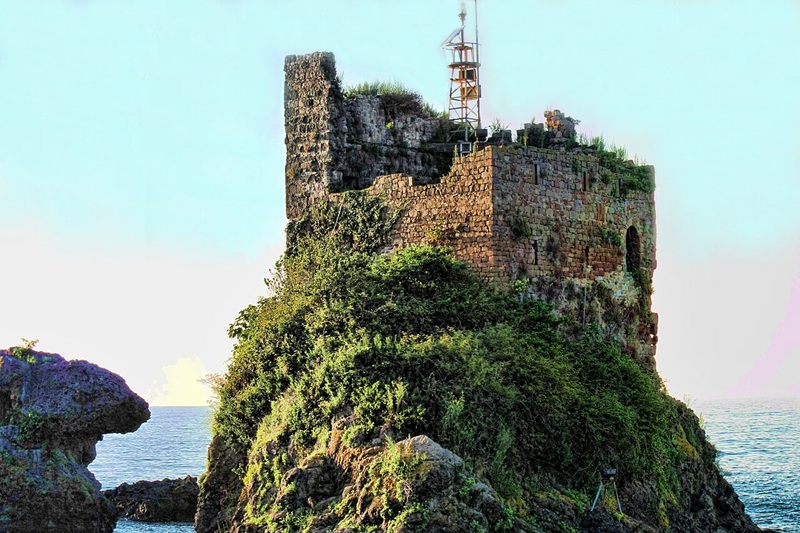
Plate 2: Kiz Kulesi Pazar (2013, Wikimedia Commons)
The late 15th century population of the Rize district had 2,063 Christian and only 162 Muslim households.1 In the 17th century, the Greek population was pressured to convert to Islam (Bryer and Winfield 1985:331).
In the late 19th century, Armenians in Pazar county totalled only 42 (Matossian 2009). Maccas (1919:83; 99) reports the county had 37,622 Turks, 400 Greeks and with one Greek boys’ school with 45 students. No Armenians were recorded.
In the mountains behind Pazar live the Hemşin2, who are a peculiar people of the east Pontic interior. The castle of Kise is about 7 km inland from Pazar along the Pazar River valley at the village of Hemşin (Fig. 1) (Bryer and Winfield 1985:336, 340). Today, the castle is in ruins.
In Ocak, about 3 km east of Pazar along the coast, are the ruins of a church, possibly dating from 1204 to 1461 (whose name is unknown) (Bryer and Winfield 1985:340). This church is still in ruins (Kepenek and Haştemoğlu 2022).
In May 1914, the Turks implemented a boycott of Greek businesses in the Trabzon metropolitanate which was applied at Rize and Pazar. Subsequently, many Christians were forced to close their establishments and take refuge in Sürmene (Greek Patriarchate 1919:112).
Occupation by Russians in World War I
In early 1916, the Russian military advanced along the north-east coast of Anatolia. The Turkish defensive position was behind the Büyük River 6 km to the east of Pazar. The Russians landed in the rear of the Turkish position near Pazar. On 4 March 1916, Russian ships bombarded the Turkish positions. At Pazar, the Russians captured two Turkish companies. The Turks at the Büyük River position fled into the mountains. On 8 March the Russians occupied Rize and moved west to Trabzon (Allen and Muratoff 1953:370, 372).
Pazar Today
Pazar’s population is 16,170 (2022 estimate; citypopulation.de). A NATO Air Base is located in Pazar and is one of 24 NATO military bases in Türkiye.
Pazar is a centre for tea cultivation [hazelnuts are also grown] and is famous for its linen and woollen shawls. Their traditional lifestyle and local handicrafts remain vibrant. With its mountains, streams and plateaus, Pazar is ideal for nature tourism and supports fishing and forestry (See: mapy.com).
Note 1
The Laz language is spoken along the coast of the Black Sea in Georgia and in the adjacent areas of Türkiye. Laz is closely related to the Mingrelian language (www.britannica.com/topic/Laz-language).
The Laz are of Caucasian origin sharing similar roots with the Migrels who live between Abkhazia and Georgia today. Both of these groups were originally Orthodox Christians who converted to Sunni Islam during the 15th century (refworld.org).
In 2013, Laz became an elective course under Türkiye’s ‘Living Languages and Dialects’ programme, though enrolment remained low. Laz-language YouTube channels and online courses have been used to revitalize the language (turkiyetoday.com).
Acknowledgements
I warmly thank Michael Bennett and Russell McCaskie for their comments to an earlier draft.
1. See: https://pontosworld.com/index.php/history/sam-topalidis/882-a-history-of-rize
2. The Hemşin were Christian Armenians who were forced to convert to Islam centuries ago but did not assimilate into the Muslim culture. Hemşin are Turks who speak Armenian and continue to celebrate feasts of the Armenian church who, for the most part, deny their Armenian origins (Simonian 2007).
References
Allen WED and Muratoff P (1953) Caucasian battlefields: a history of the wars on the Turko-Caucasian border 1828-1921, Cambridge University Press, Cambridge, England.
Beller-Hann I and Hann C (2001) Turkish region: state, market & social identities on the east Black Sea coast, James Currey, Oxford, England.
Bryer A and Winfield D (1985) The Byzantine monuments and topography of the Pontos, I, Dumbarton Oaks Research Library & Collection, Harvard University, Washington DC, USA.
Greek Patriarchate (1919) Persecution of the Greeks in Turkey 1914–1918, (Greek Patriarchate in Constantinople), Hesperia Press, London, England.
Kepenek E and Haştemoğlu HŞ (2022) ‘Re-functionalization of historical church buildings in the Eastern Black Sea region’, Akdeniz Üniversitesi Sosyal Bilimler Enstitüsü Dergisi (AKSOS), 11:116–145.
Maccas L (1919) L'hellenisme de l'Asie Mineure, [Hellenism in Asia Minor, in French], Nancy, Paris, France.
Matossian BD (2009) ‘The Pontic Armenian communities in the nineteenth century’, in Hovannisian RG (ed) (2009) Armenian Pontus: the Trebizond-Black Sea communities, Mazda Publishers Inc, Costa Mesa, California, USA.
Simonian HH (ed) (2007) The Hemshin history: society and identity in the highlands of northeast Turkey, Routledge, London.