|
In 1994, the Greek parliament assigned May 19 as a day of mourning for the genocide perpetrated by the predecessor Turkish state, the Ottoman Empire, on the Ottoman Greeks of Pontus. In 1998, the Greek parliament then assigned September 14 as a day of mourning for the genocide perpetrated by the Turks on the Greeks of Smyrna and Asia Minor as a whole. Now East Thracian Greeks are calling for April 6 to be a commemoration day for the genocide in that region. As you can see, Greeks are a divided lot, and this division only helps the perpetrator. This website condemns the refugee organisations in particular Pontian organisations who are seeking regional recognition for the genocide in Pontus ONLY. There is nothing wrong with a day of mourning for a particular region. However since 1994, Pontian Greeks have tried time and again in gaining recognition for the genocide in only their region thus excluding the Greeks of the remainder of Asia Minor and Thrace. Unlike the Armenians the Greeks are divided in mourning and in recognition. And for that reason their deceased remain unrecognized. For Greeks, genocide recognition is about ego. Not justice.
click on banner to enlarge
 |
|
GERMAN ADMIRAL USEDOM felt that the Armenians and Greeks were obstacles to German success. He ordered their removal, "like so much useless lumber!" (SKK) |
|
Read more...
|
|

«Η γενοκτονία των Ελλήνων. Από τη σιωπή και την άρνηση στη διεκδίκηση και την αναγνώριση» ήταν ο τίτλος του 2ου Συμποσίου που πραγματοποίησε ο Σύλλογος Μικρασιατών Πτολεμαΐδας, τον Απρίλιο του 2011, σε συνεργασία με το Πανεπιστήμιο Δυτικής Μακεδονίας, στο χώρο της Μικρασιατικής Στέγης. Συνδιοργανωτές του Συμποσίου ήταν ο Δήμος Εορδαίας, η Περιφέρεια Δυτικής Μακεδονίας και η Πανελλήνια Ομοσπονδία Μικρασιατικών Σωματείων, με τη στήριξη της Πανελλήνιας Ομοσπονδίας Θρακικών Σωματείων, της Παμποντιακής Ομοσπονδίας Ελλάδας, της Θρακικής Εστίας Εορδαίας και του Ποντιακού Συλλόγου Πτολεμαΐδας, |
|
Read more...
|
|
1 May 2013 | The NSW Legislative Council yesterday affirmed the Assyrian, Greek and Armenian Genocides perpetrated by the Ottoman State (now Turkey) in the early period of the 20th century. This recognition now paves the way for a federal recognition by the Australian government on the genocide/s which claimed upwards of 3.5 million lives. The motion was supporterd by the Assyrian Universal Alliance, the Australian Hellenic Council and the Armenian National Committee.
|
|
Read more...
|
|
by Sam Topalidis
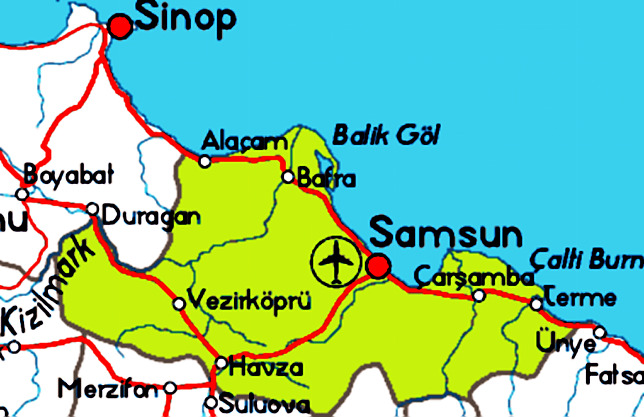
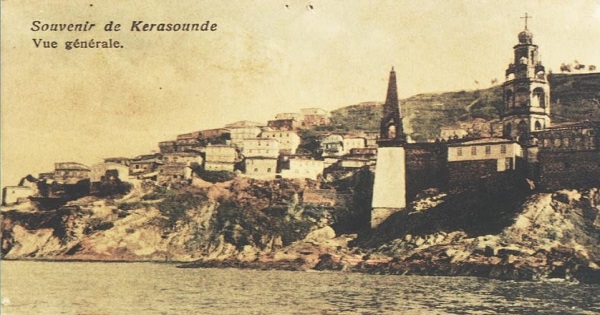
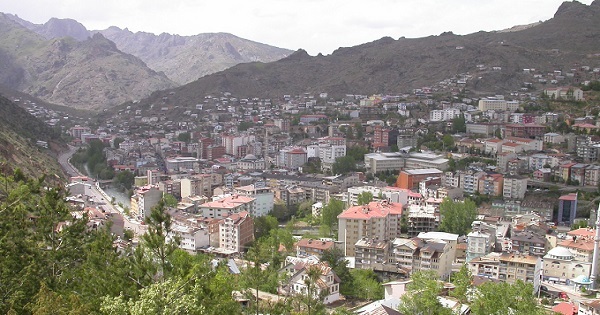
Modern Samsun (see note 1), known as Amisos by Greeks and Byzantines, Missos by Romans, Simisso by Genoese and then Samsun by Seljuk Turks and Ottoman Turks lies between the deltas of the Kizilirmak (ancient Halys) and Yeşilirmak (ancient Iris) rivers (Figure 1). It is the largest city and the main port for trade of the middle Black Sea coast in Turkey. Amisos lies within the region referred to by Greeks as the Pontos (note 2)-the northeast portion of Turkey adjacent the Black Sea. |
|
Read more...
|
|
The Armenian Genocide Museum-Institute has published the book by Gevorg Vardanyan (PhD in History) "The Greek Population in the Ottoman Empire and the Asia Minor Disaster (1914 - 1923)". This monograph represents the situation of the Greek population in the Ottoman Empire and the Greek Genocide from 1914 to 1923. The first chapter represents the Greek population distribution in the Ottoman Empire on the eve of the World War I. There is a separate analysis on the legal status of the Greek people from 1908 to 1914. |
|
Read more...
|
|
Located in North Euvoia in Greece is this Greek Genocide monument in memory of the Greeks of Pontus who established the village in 1924. The monument is inscribed with the words: 'Εις μνήμην των ξεριζωμένων Ποντίων που απο το 1924 δημιούργησαν το χωριό Βαρβάρα και προς τιμήν όσων συμπαραστέκονται σεβομένοι την μνήμη αυτών' which translates to 'In memory of the uprooted Greeks of Pontus who in 1924 established the village Barbara and in honor of those who stand by and respect their memory.' |
|
Read more...
|
|
The Crime of Genocide: Prevention, Condemnation and Elimination of Consequences was the title of the international conference which took place in Yerevan, Armenia on December 14-15, 2010. The following are the proceedings of the conference which includes a presentation by Dr. Theofanis Malkidis on the experience of the Ottoman Greeks. His presenation was titled The Convention on the prevention and punishment of the Crime of Genocide (UN 1948) and the Greek Genocide (PDF 2.4MB, see pages 105-126). |
|
Read more...
|
|
Dear Mister Prime Minister: On behalf of all of the people of Israel, I would like to apologize to you for the cowardice and fathomless idiocy of the Prime Minister of Israel. As you know, this weekend Benjamin Netanyahu sent you an "apology" for Israel having defended itself against the genocidal terrorists who attacked Israeli soldiers armed only with paintguns when they boarded the terrorist "flotilla" ship that you sent out to challenge Israel's naval blockade of the Hamas enclave in Gaza. |
|
Read more...
|
|
Raphael Lemkin was a Polish lawyer of Jewish descent. He is best known for his work against genocide, a word he coined in 1944 from the rooted words genos (Greek for family, tribe, or race) and -cide (Latin for killing). He first used the word in print in Axis Rule in Occupied Europe: Laws of Occupation - Analysis of Government - Proposals for Redress (1944), to define the massacres of 1915 against the Armenians, Greeks and Assyrians. |
|
Read more...
|
|

The archives of the Independence Courts are not opened yet. Therefore our knowledge in respect to these "courts" is almost next to nothing. However we are able to obtain information from some memories; such as Ahmet Emin Yalman's, Zekeriya Sertel's, Hüseyin Cahit Yalçın's... and by reading between the lines of serial articles which blame the accused in the media which is the voice of the party in power in all periods, and from the writings of people who accused in these courts. |
|
Read more...
|
|
Κρύον νερόν θα ίνουμαι θα μπαίνω σο πεγάδ Θα' ρθούν να κουβαλούνε με κορτσόπα και νυφάδε.
Αρμέντσα παναϊα είπα την αλήθει(α) ελέπνε σε' τo μάτωπα μ' και καίγεται η καρδία μ'.
|
|
Read more...
|
|